 Apollo Hospitals, Opp.iim 154/11,bannerghatta Road. Bannerghatta Road.bangalore-560076
 6366 229563
 Posted on June 4, 2026
TAVR in Patients with Renal Failure in Bangalore: A Safer Valve Replacement Option for High-Risk Patients
For many elderly patients, heart valve disease and kidney disease often exist together. A patient may already be living with chronic kidney disease, reduced kidney function, or dialysis dependency, and then develop severe aortic stenosis — a condition where the aortic valve becomes narrowed and restricts blood flow from the heart to the rest of the body.
In the past, open-heart surgery was often the only treatment option for severe aortic stenosis. But for patients with renal failure, advanced age, diabetes, heart failure, or multiple medical conditions, open surgery may carry a higher risk.
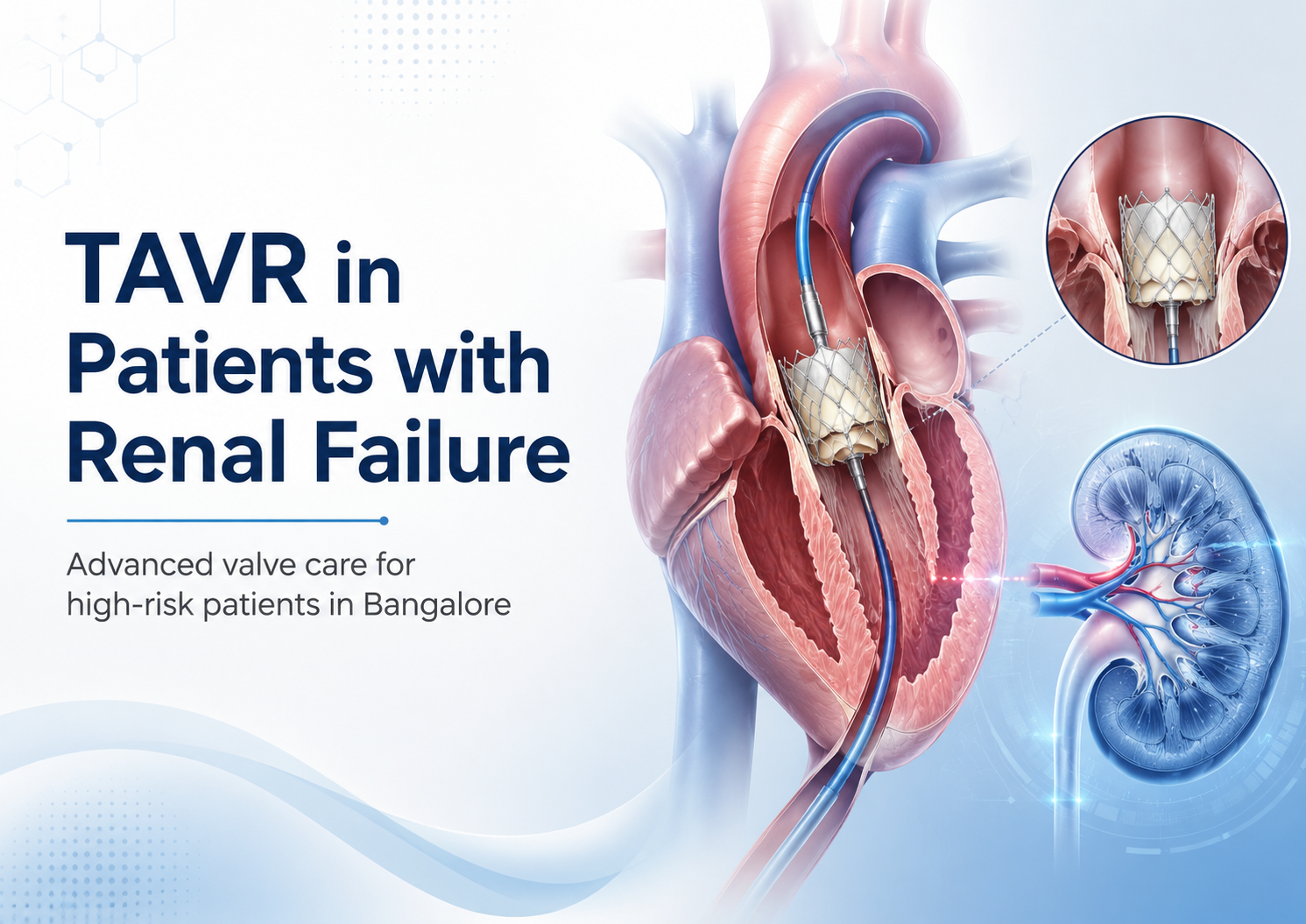
This is where TAVR, also called Transcatheter Aortic Valve Replacement, becomes an important treatment option.
TAVR is a minimally invasive procedure in which a new valve is placed inside the diseased aortic valve without removing the old valve and without conventional open-heart surgery.
For patients in Bangalore with severe aortic stenosis and kidney disease, evaluation by an experienced structural heart specialist is extremely important.
Dr. Girish B Navasundi, Senior Consultant Interventional Cardiologist, Certified TAVR Specialist, and Lead Consultant for Structural Heart Disease & Heart Failure, provides advanced evaluation and treatment for patients who may need TAVR, including medically high-risk patients with renal dysfunction.
Understanding Aortic Stenosis and Kidney Disease
Aortic stenosis is one of the most serious heart valve conditions. It occurs when the aortic valve becomes stiff, thickened, or narrowed, making it difficult for the heart to pump blood forward.
Over time, this can lead to symptoms such as:
- Breathlessness
- Chest pain or heaviness
- Dizziness or fainting
- Fatigue
- Swelling in the legs
- Worsening heart failure
- Reduced exercise capacity
Kidney disease adds another layer of complexity. Patients with chronic kidney disease may have fluid overload, anemia, high blood pressure, diabetes, vascular calcification, and reduced ability to tolerate major surgery.
Aortic stenosis is also commonly seen in elderly patients, and many of these patients may already have reduced kidney function. This means that patients with renal failure need a carefully planned treatment approach — not just for the heart valve, but also for kidney protection before, during, and after the procedure.
Why Open-Heart Surgery May Be Risky in Renal Failure Patients
Surgical Aortic Valve Replacement, or SAVR, is a proven treatment for aortic stenosis. However, it involves opening the chest, stopping the heart temporarily, and using a heart-lung machine.
For patients with renal failure or advanced chronic kidney disease, this can increase the risk of:
- Acute kidney injury after surgery
- Need for temporary or permanent dialysis
- Longer ICU stay
- Fluid imbalance
- Infection risk
- Bleeding complications
- Slow recovery
- Worsening heart failure
This does not mean surgery is never suitable. Some patients may still benefit from surgery depending on age, valve anatomy, overall health, and surgical risk. But in many high-risk patients, TAVR may offer a less invasive alternative.
How TAVR Helps Patients with Renal Failure
TAVR is usually performed through a small puncture in the artery of the leg, most commonly through the femoral artery. A catheter is guided to the heart, and the new valve is deployed inside the narrowed aortic valve.
For kidney disease patients, TAVR may be preferred because it can avoid many stresses of open-heart surgery.
Potential advantages may include:
- No large chest incision
- No conventional open-heart surgery
- Shorter hospital stay in many cases
- Faster recovery compared with surgery
- Less physiological stress for elderly or fragile patients
- Possible improvement in heart function and circulation
- Reduced risk of surgery-related kidney worsening in selected patients
However, TAVR is not risk-free. Kidney protection planning is still very important, especially in patients with advanced chronic kidney disease or dialysis dependency.
Kidney-Related Risks During TAVR
In patients with renal failure, the biggest concern during TAVR is the risk of acute kidney injury, also called AKI.
AKI means a sudden worsening of kidney function. It may happen due to:
- Contrast dye used during imaging
- Low blood pressure during the procedure
- Reduced kidney blood flow
- Existing diabetes or hypertension
- Advanced age
- Heart failure
- Calcified blood vessels
- Bleeding or vascular complications
This is why patients with kidney disease should not undergo TAVR as a routine procedure. They need detailed evaluation by a heart team experienced in structural heart interventions.
How Kidney Function Is Protected Before TAVR
For patients with renal failure, the success of TAVR depends not only on valve replacement but also on careful kidney protection.
Before the procedure, the medical team may evaluate:
- Serum creatinine
- eGFR level
- Stage of chronic kidney disease
- Dialysis status
- Urine output
- Diabetes control
- Blood pressure control
- Heart failure status
- Fluid balance
- Current medications
- CT scan requirements
- Risk of contrast exposure
In selected patients, doctors may use kidney-protective strategies such as:
- Minimizing contrast dye
- Using low-contrast imaging protocols
- Avoiding unnecessary kidney-harming medicines
- Careful hydration when appropriate
- Close monitoring of urine output
- Coordination with a nephrologist
- Planning dialysis timing in patients already on dialysis
- Monitoring creatinine after the procedure
Modern TAVR planning can often be customized for patients with reduced kidney function. Some centers may use contrast-sparing or low-contrast approaches depending on patient anatomy and risk.
Who May Be Considered for TAVR with Renal Failure?
TAVR may be considered for patients who have:
- Severe symptomatic aortic stenosis
- Chronic kidney disease
- Reduced eGFR
- High surgical risk
- Advanced age
- Heart failure
- Diabetes with kidney involvement
- Prior heart surgery
- Lung disease
- Frailty
- Dialysis dependency
- Multiple medical conditions
Common symptoms that should not be ignored include breathlessness, chest discomfort, fainting episodes, swelling, extreme fatigue, and repeated hospital admissions for heart failure.
In kidney disease patients, these symptoms may sometimes be mistaken for anemia, fluid overload, or general weakness. A proper echocardiogram and cardiac evaluation are essential.
Can Dialysis Patients Undergo TAVR?
Yes, selected dialysis patients with severe aortic stenosis may be considered for TAVR. However, they need detailed assessment.
The doctor will evaluate:
- Valve anatomy
- Artery size and calcification
- Heart pumping function
- Dialysis schedule
- Bleeding risk
- Infection risk
- Frailty
- Life expectancy
- Overall treatment goals
TAVR may help improve symptoms in selected patients, but decision-making must be individualized.
Why Experience Matters in TAVR for Kidney Patients
TAVR in a patient with normal kidney function is already a specialized procedure. TAVR in a patient with renal failure requires even more careful planning.
The treating cardiologist must understand:
- Structural heart disease
- Valve sizing
- CT and echo-based planning
- Contrast reduction strategies
- Vascular access challenges
- Heart failure optimization
- Kidney-risk monitoring
- Emergency management during complex procedures
This is why choosing a trained and experienced TAVR specialist is important.
Dr. Girish B Navasundi is a Senior Consultant Interventional Cardiologist, Certified TAVR Specialist, and Lead Consultant for Structural Heart Disease & Heart Failure in Bangalore. His expertise is especially relevant for high-risk patients who need advanced heart valve treatment with careful planning.
TAVR Evaluation in Bangalore with Dr. Girish B Navasundi
Patients with severe aortic stenosis and renal failure require a complete evaluation before deciding on treatment.
The evaluation may include:
- Detailed clinical consultation
- Echocardiography
- ECG
- Blood tests including kidney function
- CT scan or alternative imaging strategy
- Coronary artery assessment
- Risk scoring
- Heart team discussion
- Nephrology coordination when required
- Discussion with patient and family
The goal is to answer key questions:
Is the aortic stenosis severe?
Are symptoms due to valve disease?
Is the patient fit for open surgery?
Is TAVR safer than surgery?
Can the procedure be done with minimal kidney risk?
What is the expected benefit in quality of life?
Benefits Patients May Experience After TAVR
Many patients who undergo successful TAVR may experience improvement in:
- Breathlessness
- Fatigue
- Exercise capacity
- Heart failure symptoms
- Quality of life
- Ability to perform daily activities
- Repeated hospital admissions due to valve-related heart failure
However, results vary from patient to patient. Kidney disease, age, heart function, lung disease, diabetes, and overall health all affect recovery.
When Should You See a TAVR Specialist?
You should consult a TAVR specialist if you or your family member has:
- Severe aortic stenosis on echo
- Kidney failure or chronic kidney disease
- Breathlessness on walking
- Chest pain
- Fainting or dizziness
- Repeated fluid overload
- Heart failure admissions
- High surgical risk
- Advice for valve replacement but fear of open-heart surgery
Early evaluation is important. Waiting too long may lead to worsening heart failure, reduced heart pumping function, and higher treatment risk.
Consultation Locations in Bangalore
Apollo Hospitals, Bannerghatta Road
154, Apollo Hospitals, 11, Bannerghatta Rd, Opp. I.I.M, Amalodbhavi Nagar, Panduranga Nagar, Bengaluru, Karnataka 560076
Timings: Monday to Saturday, 10 AM – 4 PM
Legends Heart Center, Jayanagar
1st Floor, 37/17, 10th Main Rd, 5th Block, Jayanagar, Bengaluru, Karnataka 560041
Timings: Monday to Saturday, 4 PM – 8 PM
FAQs on TAVR in Patients with Renal Failure
1. Is TAVR safe for patients with kidney failure?
TAVR can be performed in selected patients with kidney disease or renal failure, but it requires careful planning. The medical team must assess kidney function, contrast risk, heart failure status, and overall surgical risk before deciding.
2. Can TAVR reduce the need for open-heart surgery?
Yes. TAVR is a minimally invasive alternative to surgical aortic valve replacement for selected patients with severe aortic stenosis, especially those considered high risk for open surgery.
3. Can TAVR worsen kidney function?
There is a risk of acute kidney injury after TAVR, especially in patients with pre-existing renal failure. However, with careful planning, contrast minimization, and close monitoring, this risk can be reduced in selected patients.
4. Can dialysis patients undergo TAVR?
Selected dialysis patients may be eligible for TAVR after detailed evaluation. The decision depends on valve anatomy, vascular access, heart function, bleeding risk, infection risk, and overall health condition.
5. Why is TAVR useful for elderly kidney patients?
Elderly patients with kidney disease may not tolerate open-heart surgery well. TAVR avoids a large chest incision and may allow faster recovery in selected patients.
6. Who is the right doctor for TAVR in renal failure patients in Bangalore?
Patients should consult an experienced structural heart specialist or certified TAVR specialist. In Bangalore, Dr. Girish B Navasundi provides advanced evaluation for TAVR, structural heart disease, and heart failure patients.
Conclusion
Severe aortic stenosis in a patient with renal failure is a complex and high-risk condition. But today, patients who may not be suitable for open-heart surgery have newer treatment possibilities.
TAVR offers a minimally invasive valve replacement option for selected patients with severe aortic stenosis and kidney disease. With proper planning, kidney-protective strategies, and expert structural heart care, many high-risk patients can be evaluated for safer treatment.
For patients and families in Bangalore looking for TAVR treatment in the setting of kidney disease or renal failure, consultation with Dr. Girish B Navasundi, Senior Consultant Interventional Cardiologist & Certified TAVR Specialist, can help determine the safest and most appropriate treatment path.
Medical note: This blog is for patient education only. Treatment decisions should be made after consultation with a qualified cardiologist and review of individual medical reports.