 Apollo Hospitals, Opp.iim 154/11,bannerghatta Road. Bannerghatta Road.bangalore-560076
 6366 229563
 Posted on April 10, 2026
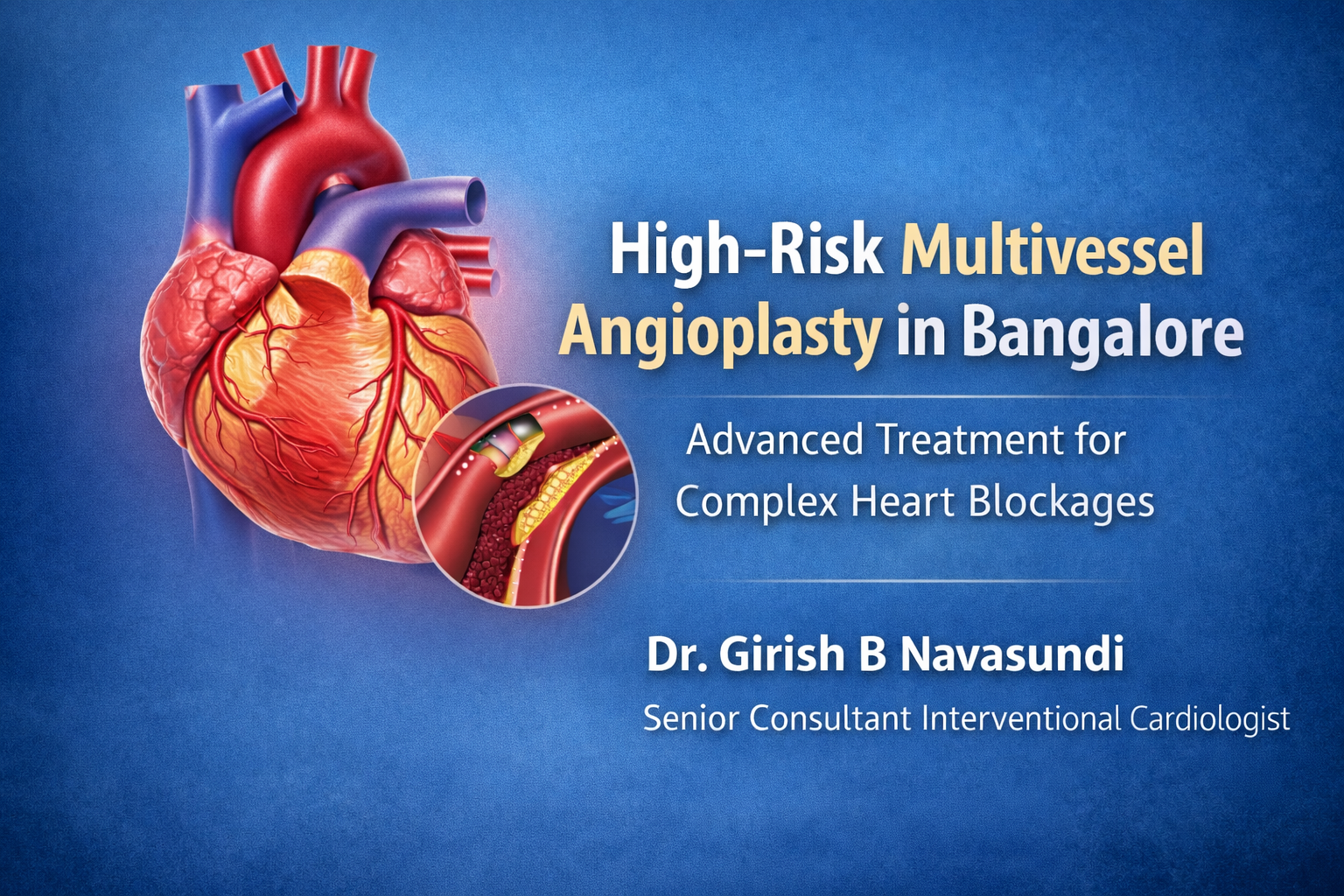
High-Risk Multivessel Angioplasty in Bangalore: Advanced Heart Care for Complex Coronary Artery Disease
A Smarter, Less-Invasive Option for Complex Heart Blockages
When people hear they have “multiple heart blockages,” the first reaction is usually fear. The second is confusion.
Do I need surgery?
Can this be treated without opening the chest?
Is it too risky?
Who should do the procedure?
That is exactly where high-risk multivessel angioplasty comes in.
This is not a routine heart procedure. It is an advanced form of angioplasty used when more than one coronary artery is narrowed or blocked and the case is medically complex. In the right patient, it can restore blood flow, reduce symptoms like chest pain and breathlessness, and offer a less-invasive alternative to open-heart bypass surgery.
For patients and families in Bangalore looking for expert care, the real question is not just whether angioplasty can be done. The real question is whether it can be done safely, precisely, and by the right specialist.
This Is Not “Just Another Angioplasty”
A simple blockage in one artery is one thing. But when two or three major heart arteries are diseased, when the arteries are heavily calcified, when the heart pumping function is already weak, or when the patient has diabetes, kidney issues, prior heart attack, or advanced age, the procedure becomes more demanding. That is what doctors mean when they call a case high-risk.
In simple words, high-risk multivessel angioplasty is for people whose heart disease is more serious than average, but who may still benefit from a catheter-based treatment instead of—or sometimes before—surgery.
Why Patients in India Are Asking About This More Often
Across India, heart disease is being diagnosed at younger ages, and many patients come for treatment only after symptoms become difficult to ignore. By the time they undergo testing, the problem is sometimes not one blockage, but several. In these situations, families want treatment that is effective, but they also worry about the recovery time, the impact of surgery, and the patient’s overall strength.
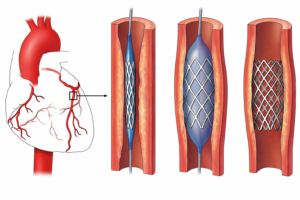
That is why many people now ask specifically about advanced angioplasty for multiple blockages. Because angioplasty is minimally invasive, it usually allows quicker recovery than open-heart surgery in many selected cases. Still, the best treatment depends on the patient’s anatomy, symptoms, and overall condition.
When This Procedure May Be Considered
A patient may be evaluated for high-risk multivessel angioplasty when there is:
- Chest pain or pressure during activity
- Breathlessness on walking or climbing stairs
- Multiple coronary artery blockages on angiogram
- A previous heart attack with significant remaining disease
- Reduced heart pumping function
- Severe blockages in important arteries supplying large areas of the heart
- Ongoing symptoms even after medicines
- High risk for bypass surgery due to age or other medical problems
Why “High-Risk” Does Not Mean “Hopeless”
The word high-risk often scares families. But in cardiology, it does not mean there is no option. It means the case requires more planning, more judgment, and more expertise.
These procedures may involve:
- Treating several arteries in one sitting or in stages
- Working through long, tight, or calcified blockages
- Choosing the right size and type of stent
- Using intravascular imaging such as IVUS or OCT in complex cases to guide treatment more precisely
- Carefully balancing benefit, safety, and recovery
Angioplasty or Bypass Surgery: Which Is Better?
This is one of the most important questions—and the honest answer is: it depends.
For some patients with multivessel coronary artery disease, especially in certain complex patterns or in people with diabetes, bypass surgery may be preferred. For others, angioplasty may be appropriate because it is less invasive, offers quicker recovery, or fits the patient’s risk profile better.
Good care is not about pushing one procedure for everyone. It is about choosing the right treatment for the right patient.
Expert Care with Dr. Girish B Navasundi in Bangalore
For patients dealing with complex coronary artery disease, Dr. Girish B Navasundi offers specialized evaluation and advanced interventional care in Bangalore.
Dr. Girish B Navasundi
Senior Consultant Interventional Cardiologist & Certified TAVR Specialist
Lead Consultant – Structural Heart Disease & Heart Failure
His practice is especially relevant for patients who need thoughtful decision-making in advanced heart conditions—not just whether a blockage can be opened, but whether the full treatment plan is right for the patient’s heart, age, symptoms, and long-term safety.
If you or a loved one has been told there are multiple heart blockages, severe coronary narrowing, or a high-risk angioplasty requirement, a specialist assessment can help clarify the safest next step.
Consultation Locations in Bangalore
Apollo Hospitals
154, Apollo Hospitals, 11, Bannerghatta Rd, Opp. I, I.M, Amalodbhavi Nagar, Panduranga Nagar, Bengaluru, Karnataka 560076
Mon – Sat: 10 AM – 4 PM
Legends Heart Center
1st Floor, 37/17, 10th Main Rd, 5th Block, Jayanagar, Bengaluru, Karnataka 560041
Mon – Sat: 4 PM – 8 PM
Why Early Evaluation Matters
Patients often wait too long because they assume chest discomfort is acidity, tiredness, or stress. Others keep postponing treatment because the words “multiple blockages” sound overwhelming.
But the truth is simple: the earlier complex heart disease is assessed, the more treatment options are usually available.
If there is ongoing chest pain, breathlessness, reduced exercise capacity, or an angiogram showing significant disease in more than one artery, a timely consultation is important.
Final Word
High-risk multivessel angioplasty is not a routine procedure. It is an advanced heart intervention for patients who need careful planning, expert hands, and the right clinical judgment.
For the right patient, it can mean:
- Relief from symptoms
- Better blood flow to the heart
- A less-invasive treatment path
- Faster recovery compared with open-heart surgery in many cases
If you are looking for high-risk multivessel angioplasty in India, especially in Bangalore, expert evaluation is the first and most important step.
FAQs
1. What is high-risk multivessel angioplasty?
It is an advanced angioplasty procedure used when more than one coronary artery is blocked and the case is medically complex due to factors like weak heart function, severe calcification, diabetes, older age, prior heart attack, or other health issues.
2. Is high-risk angioplasty safer than bypass surgery?
Not always. For some patients, bypass surgery may still be the better option. For others, angioplasty may be more suitable because it is less invasive. The safest option depends on the pattern of blockages, overall health, and heart function.
3. How do I know if I need multivessel angioplasty?
You may be evaluated for it if you have chest pain, breathlessness, multiple blockages on angiogram, a prior heart attack, or symptoms that continue despite medication.
4. Is angioplasty a major surgery?
No. Angioplasty is considered a minimally invasive procedure. It is done through a catheter, usually without opening the chest.
5. Can multiple stents be placed in one procedure?
Yes, in selected cases multiple stents may be used to treat blockages in more than one artery. The final plan depends on the anatomy, severity of disease, and the patient’s safety.
6. How long is the recovery after angioplasty?
Recovery is usually faster than open-heart surgery because angioplasty is minimally invasive. Some patients go home the same day or after an overnight stay, depending on the complexity of the case and overall condition.
7. Is high-risk multivessel angioplasty available in Bangalore?
Yes. Advanced cardiac centres in Bangalore evaluate and treat complex coronary artery disease, including high-risk multivessel angioplasty, depending on the patient’s condition and suitability.
8. Why should I consult an interventional cardiologist for multiple blockages?
Because complex coronary disease requires expert judgment on whether angioplasty, staged angioplasty, or bypass surgery is the best option. An experienced interventional cardiologist can assess the angiogram, symptoms, heart function, and overall risk before recommending treatment.