 Apollo Hospitals, Opp.iim 154/11,bannerghatta Road. Bannerghatta Road.bangalore-560076
 6366 229563
 Posted on June 10, 2026
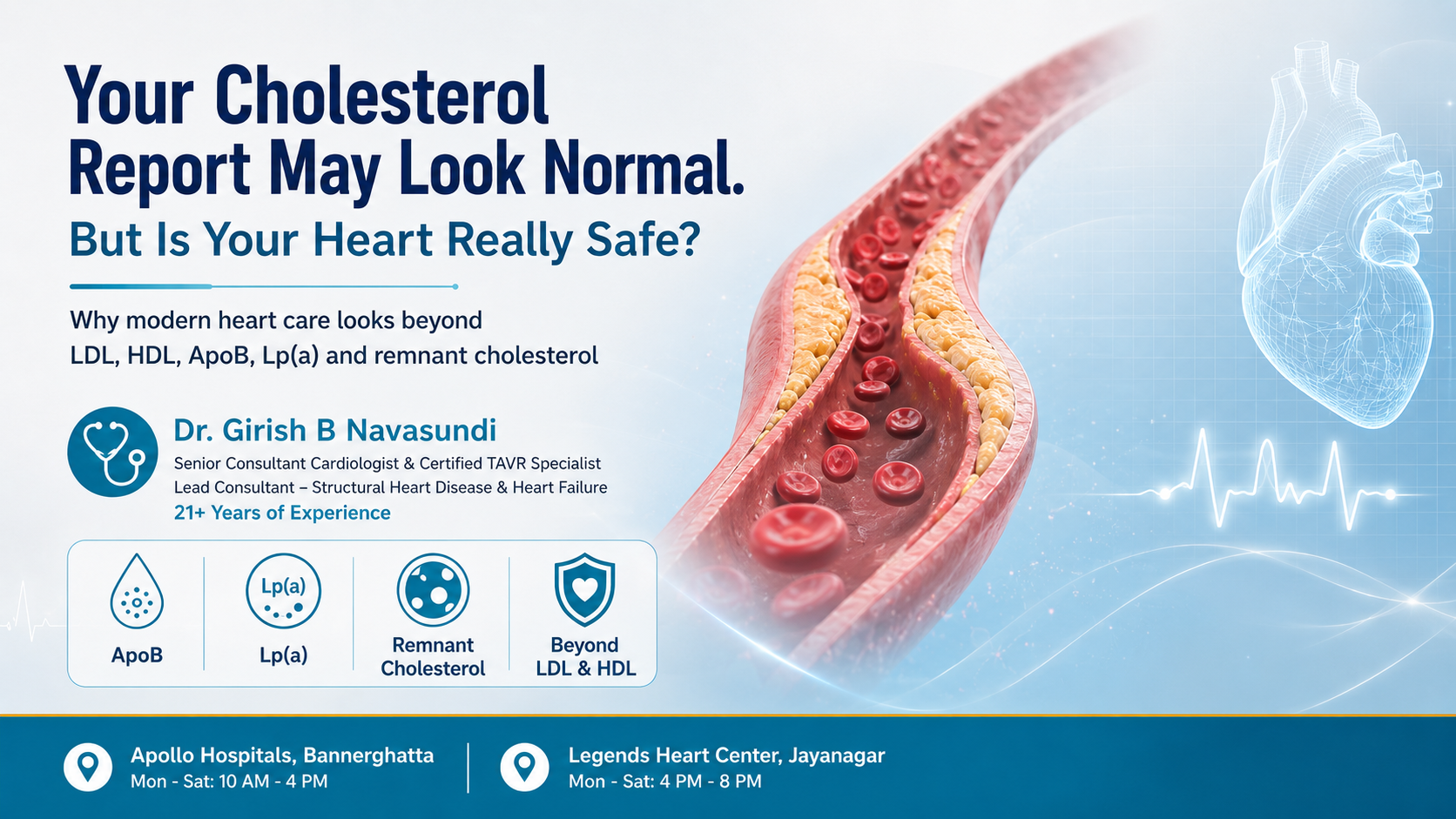
Your Cholesterol Report May Look Normal. But Is Your Heart Really Safe?
Why Modern Heart Care Looks Beyond LDL and HDL
For years, cholesterol was explained in one simple line:
LDL is bad. HDL is good.
It was easy to understand.
It was easy to remember.
And for many people, it became the only way they judged their heart risk.
But heart disease is not always that simple.
Today, cardiologists are seeing many patients who say:
“My LDL is normal. Then why did I get a blockage?”
“My cholesterol report looks fine. Do I still have heart risk?”
“My HDL is high. Doesn’t that protect me?”
“My family members had heart attacks early. Should I check something more?”
These are important questions.
Because modern cholesterol science tells us that a routine lipid profile may not always show the complete picture.
The Old Way of Looking at Cholesterol
Earlier, cholesterol reports were mostly understood like this:
LDL cholesterol = bad cholesterol
HDL cholesterol = good cholesterol
Triglycerides = fat in the blood
So the common advice became:
Reduce LDL.
Increase HDL.
Avoid oily food.
Exercise more.
This advice is still useful, but it is not complete.
LDL cholesterol is definitely important. High LDL over time can contribute to plaque build-up inside the arteries. This plaque can narrow the blood vessels and increase the risk of chest pain, heart attack or stroke.
But LDL is only one part of the story.
Some people with normal LDL may still have hidden risk. Some people with high HDL may not be fully protected. And some people may carry genetic cholesterol risks that routine reports do not show.
That is why modern cardiology looks deeper.
The New Question: How Many Harmful Particles Are in the Blood?
Cholesterol does not float freely in the blood.
It travels inside tiny carrier particles called lipoproteins.
Some particles are more likely to enter the artery wall and form plaque. These are called atherogenic particles.
So the real question is not only:
“How much cholesterol do I have?”
The better question is:
“How many harmful cholesterol particles are moving through my blood?”
This is where advanced markers like ApoB, Lp(a) and remnant cholesterol become important.
ApoB: The Particle Count That Can Reveal Hidden Risk
ApoB is one of the most useful advanced cholesterol markers.
Most harmful cholesterol particles carry one ApoB protein. So ApoB gives an idea of the number of risky particles circulating in the blood.
In simple words:
LDL tells us the cholesterol amount.
ApoB tells us the particle number.
This difference matters.
Imagine two people with the same LDL number.
One person may have fewer cholesterol particles carrying more cholesterol.
Another person may have many small harmful particles carrying cholesterol.
Their LDL value may look similar, but their risk may not be the same.
That is why ApoB can be especially helpful in people with:
Diabetes
High triglycerides
Obesity
Fatty liver
Metabolic syndrome
Insulin resistance
Family history of heart disease
Heart disease despite normal LDL
A normal LDL report does not always mean the artery risk is low.
Lp(a): The Cholesterol Risk You May Inherit
Lp(a), also called Lipoprotein(a), is another important hidden marker.
It is similar to LDL but has an extra protein attached to it. This structure may increase the risk of artery blockage, heart attack, stroke and even aortic valve disease in some patients.
The most important point about Lp(a) is this:
It is mostly genetic.
That means you may have high Lp(a) even if you:
Eat healthy
Exercise regularly
Are not overweight
Do not smoke
Have a normal routine cholesterol report
Lp(a) is not usually included in a standard lipid profile. It has to be tested separately.
People should especially discuss Lp(a) testing if they have:
Family history of early heart attack
Heart attack at a young age
Repeated artery blockages
Heart disease despite normal LDL
Aortic valve narrowing
Strong family history of cholesterol problems
Lifestyle is always important, but Lp(a) usually does not reduce significantly with diet alone. Knowing the value helps the cardiologist understand the patient’s total risk more clearly.
Remnant Cholesterol: The Risk Linked to Triglycerides
Remnant cholesterol is another marker that is gaining attention.
It comes from triglyceride-rich particles. These are leftover particles after the body processes fats.
These remnant particles may also enter the artery wall and contribute to plaque formation.
Remnant cholesterol can be more concerning in people with:
High triglycerides
Diabetes
Prediabetes
Obesity
Fatty liver
Sedentary lifestyle
Metabolic syndrome
This is why triglycerides should not be ignored.
A person may think, “My LDL is not very high, so I am safe.” But if triglycerides and remnant cholesterol are high, the overall heart risk may still be significant.
HDL: Good Cholesterol, But Not a Guarantee
HDL is commonly called good cholesterol.
But today, doctors know that HDL is not always so simple.
Low HDL may be associated with higher heart risk. But very high HDL does not always guarantee complete protection.
Also, just increasing the HDL number does not automatically mean heart attack risk goes down.
The quality and function of HDL matter more than just the number on the report.
So instead of thinking:
“My HDL is high, so I am safe,”
it is better to ask:
“What is my complete heart risk?”
Why a Normal Cholesterol Report May Still Need Attention
A routine lipid profile is useful, but it may not answer every question.
A standard report usually shows:
Total cholesterol
LDL cholesterol
HDL cholesterol
Triglycerides
These numbers are important, but they may not fully reveal hidden risk in every patient.
You may need deeper evaluation if you have:
Family history of early heart disease
Diabetes or prediabetes
High blood pressure
Smoking history
High triglycerides
Fatty liver
Obesity
Previous angioplasty or bypass surgery
Heart attack despite normal cholesterol
Repeated artery blockages
Chest pain with risk factors
In these patients, advanced cholesterol assessment can help guide better prevention and treatment.
What Should You Ask Your Cardiologist?
Instead of asking only:
“Is my cholesterol normal?”
Ask:
What is my overall heart risk?
Do I need ApoB testing?
Should I check Lp(a) once?
Are my triglycerides increasing my risk?
Is remnant cholesterol a concern?
Is my family history important?
Do I need lifestyle changes or medication?
How often should I monitor my heart health?
These questions help move the conversation from a simple cholesterol number to a complete heart protection plan.
Lifestyle Still Comes First
Advanced testing does not replace lifestyle.
A healthy lifestyle remains the foundation of heart disease prevention.
Focus on:
Regular exercise
Healthy body weight
Balanced diet
More vegetables, fruits and fiber
Less processed food
Avoiding smoking and tobacco
Controlling diabetes
Controlling blood pressure
Better sleep
Stress management
Regular heart check-ups
Medicines may be needed depending on the patient’s risk. These decisions should be made after proper cardiology evaluation.
The Bigger Message
Cholesterol care has changed.
It is no longer enough to think:
LDL = Bad
HDL = Good
Modern heart care looks at the complete risk picture.
That includes:
LDL cholesterol
HDL cholesterol
Triglycerides
ApoB
Lp(a)
Remnant cholesterol
Diabetes
Blood pressure
Smoking
Family history
Previous heart disease
Overall cardiovascular risk
A better understanding of cholesterol can help detect hidden risks earlier and guide more personalized treatment.
Consult Dr. Girish B Navasundi
Dr. Girish B Navasundi
Senior Consultant Cardiologist & Certified TAVR Specialist
Lead Consultant – Structural Heart Disease & Heart Failure
21+ Years of Experience
Apollo Hospitals, Bannerghatta
154, Apollo Hospitals, 11, Bannerghatta Rd, Opp. I.I.M, Amalodbhavi Nagar, Panduranga Nagar, Bengaluru, Karnataka 560076
Timings: Mon – Sat: 10 AM – 4 PM
Legends Heart Center, Jayanagar
1st Floor, 37/17, 10th Main Rd, 5th Block, Jayanagar, Bengaluru, Karnataka 560041
Timings: Mon – Sat: 4 PM – 8 PM
For patients with cholesterol concerns, diabetes, hypertension, family history of heart disease or previous cardiac problems, a detailed heart risk evaluation can help guide the right preventive care.
FAQs
1. Is LDL still important?
Yes. LDL remains very important in heart disease prevention. But it is not the only marker. ApoB, Lp(a), triglycerides and overall heart risk also matter.
2. Can I have heart risk even if LDL is normal?
Yes. Some people may have normal LDL but high ApoB, high Lp(a), high triglycerides, diabetes or strong family history.
3. What is ApoB?
ApoB helps estimate the number of harmful cholesterol particles in the blood. More particles may mean higher artery risk.
4. What is Lp(a)?
Lp(a) is a mostly genetic cholesterol-related particle. High Lp(a) may increase the risk of heart disease and stroke.
5. Is Lp(a) included in a routine cholesterol test?
Usually no. Lp(a) often needs a separate blood test.
6. What is remnant cholesterol?
Remnant cholesterol comes from triglyceride-rich particles and may contribute to plaque build-up in arteries.
7. Is HDL always protective?
Not always. Low HDL may be risky, but very high HDL does not always guarantee protection. Overall heart risk matters more.
8. Who should discuss advanced cholesterol testing?
People with diabetes, high triglycerides, family history of early heart disease, repeated blockages or heart disease despite normal cholesterol should discuss advanced testing with a cardiologist.