 Apollo Hospitals, Opp.iim 154/11,bannerghatta Road. Bannerghatta Road.bangalore-560076
 6366 229563
 Posted on October 13, 2026
When Is Rotablation Used During Angioplasty?
Heavily calcified heart blockage? Here’s how rotablation helps prepare a hard, rigid artery so the stent can open fully, and why not every calcified blockage needs it.
When a person is told that a heart artery is heavily calcified, angioplasty can become more challenging. A regular balloon may not open the blockage properly, and in some cases even reaching the narrowed area with a balloon or stent can be difficult.
This is where a specialised technique called rotational atherectomy, commonly known as rotablation, may be considered.
Rotablation is not required for every patient undergoing angioplasty. It is generally used when hard, calcified plaque makes it difficult to adequately prepare the artery for stent placement. The aim is to modify the calcium so the blockage can be treated more effectively and the stent can expand properly.
What Is Rotablation?
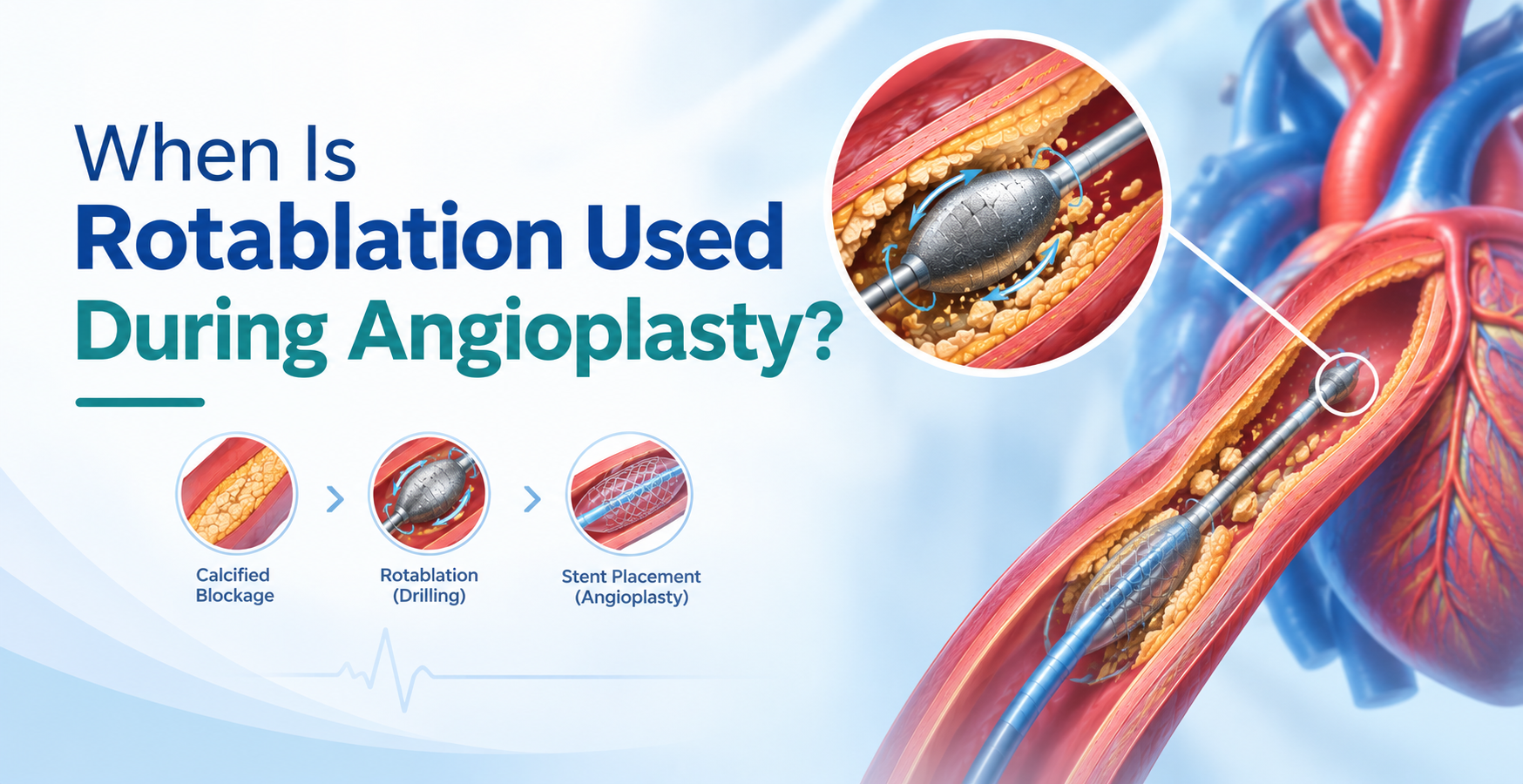
Rotablation is a plaque-modification technique used during complex coronary angioplasty.
In simple terms, a specialised catheter with a tiny rotating device at its tip is guided through the coronary artery to the calcified blockage. The rotating device works on the hard plaque and creates a smoother pathway through the lesion. This helps the cardiologist then pass balloons, and deliver and expand a stent, when a conventional balloon alone is not enough.
Why Calcium Makes Angioplasty Difficult
A coronary artery normally has some flexibility. When significant calcium builds up in the artery wall, the vessel becomes rigid, which causes several problems during PCI. Severe calcification may:
- Make it difficult for a balloon to cross the blockage
- Prevent a balloon from expanding adequately
- Make stent delivery difficult
- Prevent complete stent expansion
- Increase the technical complexity of the procedure
A stent needs to expand properly inside the artery. If calcium prevents that, the final result may be less than optimal. That is why, in selected patients, the artery is prepared before the stent is placed.
Does Every Calcified Blockage Need Rotablation?
Some calcified blockages can be treated with conventional balloon angioplasty. Others respond to specialised balloons or intravascular lithotripsy (IVL). Rotablation is considered when the calcium is particularly resistant and conventional balloon treatment is unlikely to prepare the lesion adequately.
The choice depends on:
- Severity of calcification
- Location of the blockage
- Length of calcified segment
- Can a balloon cross?
- Can a balloon expand it?
- Vessel anatomy
- Previous angioplasty attempts
- Intravascular imaging findings
Treatment is individualised, not based simply on the presence of calcium.
How Doctors Decide: Seeing Inside the Artery
A coronary angiogram gives important information about the blocked artery, but it may not always show the full extent and depth of calcium. In selected cases, imaging from inside the artery adds detail.
IVUS · Intravascular Ultrasound
Uses ultrasound from inside the artery to assess the amount and distribution of calcium, the size of the vessel and the characteristics of the blockage.
OCT · Optical Coherence Tomography
Provides high-resolution images of the artery’s inner wall, helping the cardiologist understand the calcium’s location, thickness and extent.
This information helps decide how the lesion should be prepared and whether a calcium-modification technique is appropriate.
What Happens During Rotablation?
Rotablation is performed as part of a coronary angioplasty procedure. The catheter is carefully guided to the calcified lesion, and the rotating device modifies the hard calcium to create a better pathway for the balloons that follow. Once the artery is adequately prepared, the cardiologist proceeds with balloon angioplasty and stent implantation as planned.
The procedure needs careful control and specialised expertise, because heavily calcified lesions can be technically complex.
Why Stent Expansion Matters So Much
Patients sometimes think that once a stent is placed, the job is done. But in calcified lesions, how well the stent expands matters greatly. That’s why the procedure often follows these steps:
- 1Identify the calciumAngiogram, and IVUS or OCT where needed
- 2Modify the lesionRotablation or another calcium-modification tool
- 3Expand the arteryBalloon dilatation of the prepared segment
- 4Place the stentDelivered and deployed across the lesion
- 5Assess the final resultImaging can check expansion and guide optimisation
Is Rotablation the Same as Removing the Blockage?
Not exactly. The word “atherectomy” can make patients think the whole blockage is being physically removed. In modern PCI, the primary purpose of rotational atherectomy is lesion modification: changing the hard plaque so balloon expansion and stenting work more effectively.
When a Balloon Cannot Cross the Blockage
In selected severely calcified lesions, yes, rotablation can help. If even a small balloon cannot cross or adequately prepare the lesion, rotational atherectomy may be part of the strategy. Guidance on heavily calcified coronary lesions lists it among the plaque-modification options, especially when balloon preparation is inadequate or impossible. The exact approach depends on the anatomy and the experience of the treating team.
Alternatives to Rotablation
Rotablation is one of several tools for complex calcified lesions:
Rotational Atherectomy
A spinning burr modifies hard, resistant calcium, including lesions a balloon cannot cross.
Intravascular Lithotripsy (IVL)
Creates fractures within coronary calcium, making the artery more compliant before stenting.
Cutting or Scoring Balloons
Create controlled modification of resistant plaque in selected lesions.
Orbital Atherectomy
Another plaque-modification device that may have a role in selected patients.
The choice depends on the type and location of calcium, whether equipment can cross the lesion, and the overall anatomy of the artery.
After an Unsuccessful Angioplasty
A failed or incomplete previous angioplasty does not automatically mean the artery cannot be treated. The next step is to understand why the earlier attempt didn’t work:
- Was the balloon unable to cross?
- Could the balloon not expand?
- Was the calcium extremely hard?
- Was the stent difficult to deliver?
- Was an existing stent under-expanded?
Reviewing previous angiograms and, when appropriate, intravascular imaging helps identify the problem. A different lesion-preparation strategy, including rotablation or another technique, may then be considered.
Quick FAQs
Is rotablation needed for every calcified heart blockage?
No. Many calcified lesions can be treated without it. It is considered when calcium is a significant obstacle to balloon treatment or stent delivery and expansion.
Is rotablation the same as regular angioplasty?
No. It is a specialised plaque-modification technique that may be used before balloon angioplasty and stenting in selected calcified lesions.
Does rotablation remove all the calcium?
Not necessarily. The purpose is to modify the calcium enough to allow effective lesion preparation and stent expansion.
Can it be used if a balloon cannot cross the blockage?
In selected lesions, yes, when conventional balloon crossing or preparation is not possible or adequate.
Is IVL an alternative to rotablation?
IVL is another calcium-modification technique and may suit certain calcified lesions. The choice depends on the anatomy and characteristics of the blockage.
Can rotablation be used in a previously stented artery?
An under-expanded stent may need specialised assessment and treatment. The right approach depends on why it is under-expanded and on the underlying anatomy.
Does having calcium mean angioplasty will fail?
No. Calcium makes angioplasty more technically challenging, but several modern techniques can help manage complex lesions.
How does the doctor choose a technique?
Based on the severity and pattern of calcium, vessel anatomy, whether equipment can cross, intravascular imaging findings when appropriate, and the overall treatment plan.
Does rotablation treat the heart disease itself?
It is a procedural technique to prepare selected calcified lesions for PCI. Long-term care also involves appropriate medicines and managing cardiovascular risk factors.
So, When Does a Calcified Blockage Need Rotablation?
The presence of calcium alone doesn’t decide it. The real question is whether the calcium is making it difficult to cross, expand or adequately prepare the blockage for stenting. With modern imaging and a range of calcium-modification tools, complex lesions can be treated with a strategy tailored to each patient.
A calcified artery does not always mean angioplasty cannot be done. Sometimes it means the blockage needs careful preparation before the stent is placed.
Apollo Hospitals, Bannerghatta Road · Legends Heart Center, Jayanagar, BengaluruEvaluates patients with complex coronary blockages, calcified lesions, multivessel disease, CTOs and challenging angioplasty cases.
This article is for patient education. Treatment should be individualised after clinical, angiographic and, when appropriate, intravascular imaging evaluation.
References: American College of Cardiology; SCAI (Society for Cardiovascular Angiography & Interventions).